Saudi Oil Pipeline Attack Shakes Global Energy Markets in Evening News Update
A reported attack on Saudi oil pipeline infrastructure became the focus of the evening world news update on 14 September 2026, adding fresh pressure to already sensitive global energy markets.
Details remained limited at the time of writing. No verified casualty figure, damage estimate, or duration of disruption had been confirmed publicly in the available update. Even so, the incident drew immediate attention because Saudi Arabia sits at the centre of global crude supply, and any threat to its energy network can affect prices far beyond the Gulf.
For oil buyers, refiners, airlines, governments, and consumers, the key question is simple: does this remain a contained security incident, or does it become a supply shock?

What is known so far
The evening update centred on a reported attack involving Saudi oil pipeline infrastructure. The precise location, method, scale of damage, and operational impact were not confirmed in the initial information available for this report.
Saudi energy infrastructure includes pipelines, processing facilities, storage sites, export terminals, and links between inland production areas and coastal shipment points. Each part of that network matters because crude oil must move smoothly from fields to processors and then on to domestic users or global customers.
In the first hours after a reported strike, authorities and operators usually focus on four urgent tasks:
Securing the affected area
Checking for fire, leaks, or environmental damage
Rerouting flows where possible
Assessing whether exports or domestic supply are affected
The lack of full confirmation did not stop traders from reacting. Oil markets often move on risk before hard supply numbers arrive. The memory of past attacks on Gulf energy infrastructure has made market participants sensitive to any sign that production, processing, or exports could face disruption.
Key point: oil prices do not respond only to barrels lost. They also respond to the fear that more barrels could be at risk.
That fear was enough to place the incident at the centre of the evening news cycle.
Why one pipeline attack can move global oil prices
A single pipeline may sound like a local target. In oil markets, it can carry much wider meaning.
Crude oil moves through a chain. Production depends on wells, gathering systems, pipelines, processing plants, storage tanks, ports, tankers, refineries, and finance. A disruption at one point can slow the rest. Even if the physical damage is limited, markets may add a risk premium to oil prices until they know the threat has passed.
Saudi Arabia is one of the world’s most important oil exporters. It also plays a central role in spare production capacity, which is the ability to increase output when supply elsewhere falls. That gives Saudi energy infrastructure a market value beyond its national borders.
When a Saudi pipeline comes under attack, traders watch for three risks.
The first is direct supply loss. If crude cannot move through a damaged line, output may need to be reduced until repairs are complete or alternate routes are used.
The second is export uncertainty. Buyers in Asia, Europe, and other regions need confidence that shipments will arrive on schedule. Any doubt can affect refinery planning.
The third is security contagion. Markets ask whether the incident is isolated or part of a wider pattern. If traders fear repeat attacks, insurance costs, freight rates, and hedging activity can change quickly.
That is why the Saudi oil pipeline attack drew attention well before full technical details were available.
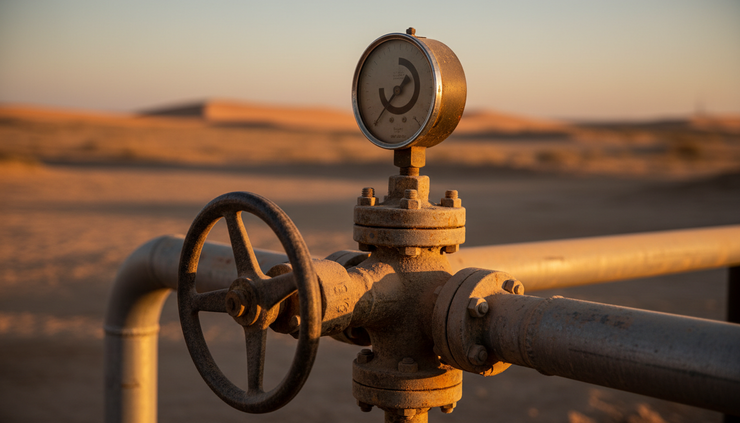
What global markets are watching overnight
The next market move will depend on what official statements and independent shipping or refinery signals show overnight. Traders will look less at headlines and more at whether physical flows change.
Market signal | Why it matters |
Confirmation of limited damage | Could reduce the immediate risk premium if flows continue |
Reports of a prolonged shutdown | Could lift crude prices and fuel cost expectations |
Evidence of rerouted supply | May calm buyers if alternate lines can carry enough volume |
Changes in export loading schedules | Directly affects refiners waiting for cargoes |
A wider security warning | Could raise freight, insurance, and hedging costs |
Quiet physical markets after the report | May suggest that the effect is contained |
Oil benchmarks often react first through futures trading. Refined products such as petrol, diesel, aviation turbine fuel, and naphtha may respond later, depending on the size and length of the disruption.
There is also a currency angle. Crude oil is traded globally in US dollars. For importers, local fuel costs depend not only on oil prices but also on exchange rates. A rise in crude prices can feel sharper in countries whose currencies weaken at the same time.
The early evening reaction, then, should be read with care. A quick price jump does not prove a long crisis. A calm first response does not prove the risk has gone. The next confirmed operational update matters more than market noise.
India and Asia face a familiar energy risk
Asia has the most to watch because it remains a major destination for Middle Eastern crude. India, in particular, is highly import-dependent for crude oil and has long managed the challenge of securing reliable supplies at affordable prices.
For Indian refiners, any Middle East supply risk can affect planning. Refineries work with cargo schedules, crude grades, storage levels, and product demand cycles. A short disruption may be manageable if inventories are healthy and alternate cargoes are available. A longer disruption can force buyers to pay more, change crude blends, or draw down stocks.
Consumers do not always see the effect at the fuel pump immediately. Petrol and diesel prices in India depend on several layers:
Global crude prices
Refining margins
Freight and insurance costs
The rupee-dollar exchange rate
Central and state taxes
Domestic pricing decisions
That means a pipeline incident in Saudi Arabia does not automatically translate into an instant change in retail fuel prices. But it can still influence the cost base for refiners and the wider inflation outlook.
Aviation is another channel. Jet fuel is a major cost for airlines. If crude and product prices rise for more than a short period, carriers may face higher operating costs. Sectors linked to petrochemicals, paints, plastics, fertilisers, and transport can also feel pressure if energy costs stay elevated.
For policymakers, the concern is not only price. It is supply confidence. Stable energy flows help contain inflation, support industrial activity, and protect household budgets.

The security context around Saudi oil infrastructure
Saudi energy sites have faced serious threats before. The widely known 2019 attacks on Abqaiq and Khurais showed how drones and missiles can target critical oil facilities and briefly unsettle global supply expectations. That episode remains a reference point for traders whenever Saudi infrastructure appears at risk.
The current reported pipeline incident will be judged against that history. Markets will ask whether it signals a one-off breach, a localised strike, or a broader threat to energy assets in the Gulf.
Energy infrastructure is difficult to secure because it covers large distances. Pipelines can cross remote terrain. Pumping stations, valves, storage sites, and control systems all need protection. Operators can build redundancy, improve surveillance, and reroute flows, but no network is without risk.
The Gulf’s importance also extends beyond production. The region sits near vital shipping lanes. Crude and refined products move through ports and maritime chokepoints that matter to global trade. Any security event near that system can affect sentiment, even if ships continue moving.
This is why official messaging matters. Clear information can prevent panic. Vague or delayed updates can leave markets to price worst-case scenarios.
What comes next
The next 24 hours will probably decide whether this remains a short-lived market scare or becomes a larger energy story.
The most important updates will include:
The exact site and operating role of the affected pipeline
The presence or absence of casualties
The scale of fire, leakage, or physical damage
Whether crude flows have stopped, slowed, or been rerouted
Any change to export loading schedules
Security assessments from Saudi authorities and regional partners
Oil importers will also watch for signals from producers’ groups, major consumers, and shipping insurers. If the damage is small and flows continue, the market may stabilise. If repairs take longer or more threats emerge, prices could remain under pressure.
For now, the hard facts are still developing. The market reaction reflects uncertainty as much as confirmed disruption.

The takeaway from the evening update
The reported attack on Saudi oil pipeline infrastructure has shaken global energy markets because it touches a critical point in the world’s oil system. The direct impact is still unclear, but the risk itself is enough to move prices, shift expectations, and put import-dependent economies on alert.
The story now turns on verification. If authorities confirm limited damage and steady flows, the shock may fade. If the incident disrupts supply or points to a wider threat, the consequences could spread through crude prices, shipping, refining, and fuel costs.
This report is for general information only and should not be treated as financial or trading advice.


Comments