Gaza Humanitarian Crisis Deepens for Civilians and Children Amid Food Water and Healthcare Shortages
Palestinian civilians in Gaza are facing a worsening humanitarian emergency as families struggle to find food, safe drinking water, medical care, electricity and shelter amid continuing violence and mass displacement. UN agencies, OCHA, WHO, UNRWA and Reuters reporting point to a civilian population under severe pressure, with children among the most exposed to hunger, disease, trauma and interrupted education.

Civilians remain trapped between violence and survival needs
Daily life in Gaza has narrowed to a search for safety, bread, water and medicine. For many families, the routines that once shaped ordinary days have been replaced by queues, movement between temporary shelters and uncertainty over where the next meal will come from.
UN humanitarian agencies have repeatedly warned that civilians are bearing the heaviest cost of the conflict. OCHA has reported that widespread displacement, damaged infrastructure, access restrictions and insecurity continue to obstruct aid operations. Reuters has also documented the strain on families living in crowded shelters and makeshift camps, where basic services are far below what people need.
For parents, each day brings practical and painful choices. A family may have to decide whether to spend scarce money on flour, medicine, transport or clean water. Many households have lost income, savings and regular access to markets. Even when goods are available, prices can be beyond reach for displaced families.
Children face a particularly harsh reality. Many have been out of school for long periods. They live with repeated displacement, limited food, unsafe water and the constant stress of violence. UN agencies have warned that the combination of hunger, disease risk and trauma is especially dangerous for young children, pregnant women, older people and people with disabilities.
The crisis is not limited to one part of daily life. It affects every basic need at once.
Children and families face hunger and deepening food insecurity
Food shortages remain one of the clearest signs of the emergency. The UN and humanitarian partners have warned for months that Gaza faces extreme food insecurity, with families often lacking reliable access to enough nutritious food.
Markets have been disrupted by damaged roads, insecurity, movement restrictions and limited commercial supplies. Aid convoys have faced serious challenges, including delays, access constraints and safety risks. OCHA has said that humanitarian operations need sustained, safe and predictable access to reach people across Gaza.
For families, food insecurity is felt in small and repeated losses. Meals become smaller. Adults skip food so children can eat. Fresh produce, meat, dairy and infant nutrition become difficult to obtain. Parents may depend on canned goods, flour or whatever distributions are available.
Children are at special risk when diets lose variety. Lack of nutrition weakens immunity and increases vulnerability to illness, especially when clean water and medical care are also scarce. WHO and UNICEF have warned in past emergencies that malnutrition and infectious disease can quickly reinforce each other when water, sanitation and healthcare systems break down.
In Gaza, those risks are intensified by overcrowded shelters. Families living in tents, schools, damaged buildings or temporary sites often have limited space for cooking and storing food safely. Fuel shortages make cooking harder. Many people rely on shared stoves, open fires or prepared food when available.
The humanitarian challenge is not only the amount of food entering Gaza. It is whether families can safely and regularly receive it where they are.
Safe drinking water remains out of reach for many
The shortage of safe water has become a central part of the Gaza humanitarian crisis for civilians and children. UN agencies have reported major damage to water and sanitation systems, while fuel and electricity shortages have limited the operation of pumps, desalination plants and wastewater facilities.
Many families rely on water trucking, public distribution points or improvised storage containers. Some walk long distances or wait in queues for hours. In crowded displacement sites, the available water often falls far below normal daily needs for drinking, washing, cooking and hygiene.
Unsafe water raises the risk of disease. When families cannot wash hands regularly, clean feeding bottles, bathe children or maintain toilets, illnesses can spread quickly. OCHA and WHO have both highlighted public health risks linked to overcrowding, damaged sanitation systems and limited clean water.
The impact on children is immediate. Diarrhoeal illness can become dangerous when healthcare is hard to access and nutrition is poor. Infants need safe water for formula preparation when breastfeeding is not possible. Pregnant women and nursing mothers need adequate water to protect their own health and their children’s health.

Water is also linked to dignity. In displacement sites, families need privacy and safe sanitation, especially women and girls. Lack of adequate toilets, washing areas and lighting adds to daily stress and can expose vulnerable people to further risks.
Healthcare services are stretched beyond normal capacity
Gaza’s healthcare system is under severe strain. WHO has repeatedly reported that hospitals and clinics face shortages of fuel, medicine, surgical supplies, diagnostic equipment and trained staff. Health facilities have also been affected by insecurity, damage and overcrowding.
Hospitals that remain operational must treat conflict-related injuries, childbirth complications, chronic diseases, infections and malnutrition-related conditions, often with limited supplies. UN agencies have warned that interrupted care for cancer, kidney disease, diabetes, heart disease and other chronic conditions can have long-term consequences.
For families, healthcare access can depend on distance, safety and availability. A parent with a sick child may not know whether a nearby clinic is functioning, whether medicine is available or whether the route is safe. Ambulance services and patient transfers have also faced major obstacles due to insecurity and damaged roads.
The burden on medical workers is immense. Doctors, nurses, paramedics and support staff continue to work in difficult conditions, often while displaced themselves or caring for their own families. WHO has called for the protection of healthcare workers, patients, hospitals and ambulances under international humanitarian law.
Maternal and child health services are especially vulnerable. Pregnant women need safe delivery care, emergency obstetric support and newborn services. Babies need vaccinations, monitoring and treatment for common illnesses. When health services collapse or become inaccessible, preventable conditions can become life-threatening.
Mental health needs are also growing. Children exposed to repeated fear, loss, displacement and uncertainty may show signs of anxiety, sleep disruption and distress. Families need psychosocial support, safe spaces and a return to stable routines, but these services are hard to maintain during active conflict.
Electricity shortages disrupt every essential service
Electricity is not only about light. In Gaza, power shortages affect water pumping, hospital equipment, cold storage for medicines, communications, sanitation and bread production.
Fuel shortages have forced many essential services to reduce operations. Hospitals need fuel for generators. Water facilities need power to pump and treat water. Bakeries need energy to produce bread at scale. Telecommunications networks need electricity to keep families connected and aid groups coordinated.
When power fails, families lose the ability to charge phones, contact relatives, receive safety information or seek help. For displaced people, communication can be a lifeline. It helps them locate aid distributions, check on loved ones and follow warnings about movement.
Electricity shortages also make nights more difficult in crowded shelters and camps. Families rely on small lamps, shared batteries or no lighting at all. This affects safety, hygiene and children’s ability to rest.
Aid agencies have consistently called for fuel access to support critical civilian infrastructure. Without fuel and power, the crisis spreads across services that people need to survive.
Displacement leaves families without stable shelter
Most people in Gaza have been displaced, many more than once, according to UN reporting. Families have moved from homes to relatives’ houses, schools, hospitals, tents, public buildings or open areas. Some return to damaged neighbourhoods when conditions become unbearable elsewhere, only to find little access to services.
UNRWA has played a major role in sheltering displaced people, but the agency has warned that shelters are overcrowded and resources are stretched. In many sites, families live with limited bedding, poor sanitation, little privacy and exposure to weather.
Shelter is one of the most visible signs of the crisis. But it is also connected to health, protection and education. A child living in a crowded tent is more exposed to cold, heat, insects, disease and stress. A family without a secure shelter may struggle to store food, protect documents or care for elderly relatives.
Women, children, older people and people with disabilities often face higher risks in displacement. They may need safer toilets, accessible routes, medical support, privacy and protection services. Humanitarian agencies have stressed the need for aid that reaches vulnerable groups and accounts for their specific needs.

The longer displacement continues, the harder recovery becomes. Children miss school. Parents lose work. Families spend down assets and become more dependent on aid. Housing damage, destroyed infrastructure and unexploded hazards may delay any safe return.
Aid agencies call for safe access and protection of civilians
UN agencies and humanitarian organisations have called for civilians to be protected, hostilities to respect international humanitarian law and aid operations to receive safe, sustained and unhindered access.
OCHA has emphasised that humanitarian assistance must be able to reach people wherever they are. WHO has called for protection of health facilities and medical workers. UNRWA has warned that restrictions on aid and damage to civilian infrastructure deepen suffering among displaced families. Reuters reporting has continued to show the scale of hardship through accounts from civilians, aid officials and medical staff.
Humanitarian workers face difficult conditions. They must coordinate convoys, assess needs, distribute supplies and support shelters while operating in an insecure environment. Aid delivery can be disrupted by damaged roads, communications outages, security incidents and shortages of fuel.
The needs remain broad and urgent:
Food assistance
Families need regular access to enough nutritious food, including support for infants, pregnant women and those with medical needs.
Safe water and sanitation
Water systems, desalination, trucking, toilets and hygiene supplies need reliable support to reduce disease risk.
Healthcare and medicines
Hospitals and clinics need fuel, supplies, staff protection and safe routes for patients.
Shelter and protection
Displaced people need safe shelter, blankets, weather protection, privacy and support for vulnerable groups.
Electricity and fuel for civilian services
Power is essential for hospitals, water systems, bakeries, communications and sanitation.
The crisis is reshaping childhood in Gaza
For children, the emergency reaches beyond immediate physical needs. Childhood depends on safety, schooling, play, family routines and trusted adults who can provide care. In Gaza, many of these supports have been badly disrupted.
Schools have been closed, damaged or used as shelters. Children who once followed lessons now spend days waiting for water, standing in food lines or moving between shelter sites. Parents try to create moments of normal life, but the pressures are constant.
A child’s question may be simple: when will we eat, where will we sleep, where is my school, where are my friends. Families often cannot answer with certainty.
The loss of education also carries long-term risks. Missed schooling can widen learning gaps, increase child protection concerns and make recovery harder once violence eases. Humanitarian agencies have often stressed that education in emergencies is not optional. It gives children structure, safety and a path back to stability.
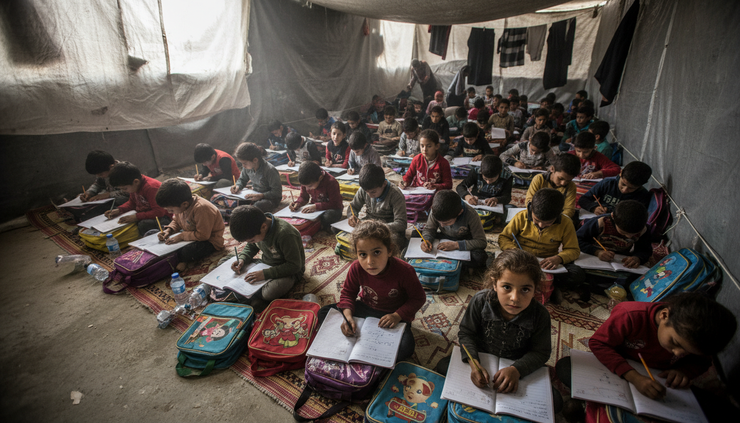
Children also need psychosocial support. This may include safe spaces, trained counsellors, child-friendly activities and support for caregivers. These services cannot replace safety, food or shelter, but they help children cope and reduce harm during prolonged crisis.
What happens next depends on civilian protection and aid access
The humanitarian situation in Gaza remains severe because families face several crises at the same time. Food shortages are worsened by unsafe water. Health risks grow when sanitation fails. Hospitals struggle when fuel runs low. Displacement becomes more dangerous when shelter, privacy and protection are limited.
Reliable humanitarian reporting from the UN, OCHA, WHO, UNRWA and Reuters shows a consistent picture: civilians need protection, aid groups need safe access and essential services need urgent support.
The immediate priority is to protect civilians from further harm and ensure that humanitarian assistance reaches families at scale. That means safe passage for aid, protection of healthcare, restoration of water and sanitation systems, fuel for essential services and support for displaced people living in overcrowded conditions.
For Gaza’s children and families, aid is not an abstract demand. It is bread, clean water, medicine, shelter and the chance to survive another day with dignity. Civilian protection and humanitarian access must remain at the centre of every response to the crisis.
Gaza Humanitarian Crisis Deepens Amid Food, Water and Healthcare Shortages
A detailed news report on Gaza’s humanitarian crisis, focusing on Palestinian civilians, children, food shortages, unsafe water, healthcare strain, electricity cuts and displacement, based on UN, OCHA, WHO, UNRWA and Reuters reporting.


Comments